
How is your food waste recycled?
What happens to your food waste?
Something rather special happens to your food waste once it arrives at our recycling plant just outside Bishops Cleeve near Cheltenham. After leaving your kitchen caddy, it embarks on a remarkable transformation process that enables it to generate gas for local homes and fertiliser that helps farmers grow bigger and healthier crops. 🌾
Here is an Instagram video from when Emilie from our Sustainability team visited the facility.
If you would like to order a food waste caddy to start recycling your food waste, just request one via your local council website.
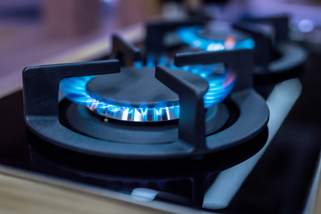
- The biogas that we produce is processed to create the gas we use in our homes. It can then be injected directly into the gas grid. The site stores large volumes of biogas ready to be turned into gas - a huge advantage over other renewable systems that can’t efficiently store power or only produce it when the elements allow. The gas injected into the local gas grid network is primarily used to heat homes and in cooking. So, when you turn on your gas hob it could be powered by the food you recycled a few weeks ago!
- The remaining digested liquid is then screened and pumped into a storage tank ready to be used as liquid fertiliser which with its high values of nitrogen, phosphate and potassium, provides a very eco-friendly and sustainable resource producing bigger, stronger crops and a better yield per acre for farmers.
🙌 At our Bishops Cleeve plant, we are very proud to have recently injected a record 11 million cubic metres of biomethane gas into the national grid. 🙌
>So - next time you squeeze out a teabag or scrape your plates into your food waste caddy, remember you are playing a vital part in keeping our homes warm and enabling us to cook in a sustainable way 🌍👏
To find out where the rest of your recycling goes, have a look at our Recycling Destinations page.
Last reviewed: