
Composting as an alternative to food waste collections
Gloucestershire Household Recycling Centres are not licensed to take any business or trade waste. It is illegal for anyone to deposit business or commercial waste at any of our sites.
As food waste contracts change there is an opportunity to save money on food and garden waste collections through composting.
On-site composting and community composting schemes are compliant with Simpler Recycling. However, if you produce any additional food waste that you do not compost yourself then you must arrange for this to be collected separately for recycling.
Particular consideration should be taken for on-site composting of food waste containing animal by-products. More details of guidance on this can be found at Using animal material in home, work or community compost heaps and at T23 waste exemption: aerobic composting and associated prior treatment.
If you intend to use the compost on the same premises where it was produced, you will not need APHA approval to do so. If you intend to use the compost at a location other than where it was produced, including selling it to other people, you may need approval for your compost process. The table shown on the Gov.uk guidance page can be used to determine whether you require approval or not. If you score 19 or less, you do not require approval to supply or sell your compost for use at another location. However, if you score 20 or more, you should contact APHA to discuss your approval requirements.
· It will be cheaper in the long run
· It is better for the environment
· It will reduce trucks and visitors to your site
· It can be a great way of educating visitors about their waste, how to take ownership of it and manage it sustainably and learn about the process of composting and the science behind it
· It will be cheaper in the long run
· It is better for the environment
· It will reduce trucks and visitors to your site
· It can be a great way of educating visitors about their waste, how to take ownership of it and manage it sustainably and learn about the process of composting and the science behind it
· Food waste collections for the largest businesses can cost £40 a week.
· Garden waste collections typically cost around £60 per collection.
· The largest businesses with a 52 week food collection and a monthly garden waste collection could save £2,440 a year by composting.
· Food waste collections for the largest businesses can cost £40 a week.
· Garden waste collections typically cost around £60 per collection.
· The largest businesses with a 52 week food collection and a monthly garden waste collection could save £2,440 a year by composting.
|
Weekly food collections |
Garden waste collections |
Total cost per year |
Pay period off for £5,000 system |
|
£ 10 |
One per year £60 |
£520 |
9.6 years |
|
£ 20 |
Two per year £120 |
£1,040 |
4.8 years |
|
£ 30 |
Three per year £180 |
£1,560 |
3.2 years |
|
£ 40 |
Ten per year £600 |
£2,440 |
2.5 years |
|
Weekly food collections |
Garden waste collections |
Total cost per year |
Pay period off for £5,000 system |
|
£ 10 |
One per year £60 |
£520 |
9.6 years |
|
£ 20 |
Two per year £120 |
£1,040 |
4.8 years |
|
£ 30 |
Three per year £180 |
£1,560 |
3.2 years |
|
£ 40 |
Ten per year £600 |
£2,440 |
2.5 years |
· Ridan composting systems cost around £5,000 so could potentially pay off within two and a half years for the largest sites. These systems can handle both cooked and uncooked food. You need to add wood chip to these systems alongside the waste. You can find out more about these systems here https://www.ridan.co.uk/community/sectors/composting-for-schools/ Please see the case study below from Leckhampton school about their new Ridan Composter.
· Hot composting systems are insulated compost bins that get to warmer temperatures and so break down waste more quickly. Typically in 6 months – 1 year. Whilst a very carefully managed hot composting system can deal with cooked food waste it is best to start with uncooked waste.
· Cold composting system may not be able to handle as much waste as hot or larger composting systems. They are also not able to process the same range of materials but can be great for a small amount of garden waste, vegetable peelings and fruit waste. Using these bins waste takes around 1-2 years to break down to compost. They must be turned regularly. See the link below to order free small compost bins.
· Ridan composting systems cost around £5,000 so could potentially pay off within two and a half years for the largest sites. These systems can handle both cooked and uncooked food. You need to add wood chip to these systems alongside the waste. You can find out more about these systems here https://www.ridan.co.uk/community/sectors/composting-for-schools/ Please see the case study below from Leckhampton school about their new Ridan Composter.
· Hot composting systems are insulated compost bins that get to warmer temperatures and so break down waste more quickly. Typically in 6 months – 1 year. Whilst a very carefully managed hot composting system can deal with cooked food waste it is best to start with uncooked waste.
· Cold composting system may not be able to handle as much waste as hot or larger composting systems. They are also not able to process the same range of materials but can be great for a small amount of garden waste, vegetable peelings and fruit waste. Using these bins waste takes around 1-2 years to break down to compost. They must be turned regularly. See the link below to order free small compost bins.
· Cooked and uncooked food
· Cardboard and paper
· Garden waste including wood, grass cuttings, weeds etc.
· Cooked and uncooked food
· Cardboard and paper
· Garden waste including wood, grass cuttings, weeds etc.
Compost bins should be ‘turned’ twice a week in summer and less often in winter for the quickest results. Find out more on our website https://www.gloucestershirerecycles.com/reduce/composting/home-composting/
Compost bins should be ‘turned’ twice a week in summer and less often in winter for the quickest results. Find out more on our website https://www.gloucestershirerecycles.com/reduce/composting/home-composting/
You can find out how to manage pests in your compost on our website https://www.gloucestershirerecycles.com/reduce/composting/troubleshooting-compost-problems/
You can find out how to manage pests in your compost on our website https://www.gloucestershirerecycles.com/reduce/composting/troubleshooting-compost-problems/
You will need to contact the environment agency to get an T23 waste exemption to compost on your premises https://www.gov.uk/guidance/waste-exemption-t23-aerobic-composting-and-associated-prior-treatment
You will need to contact the environment agency to get an T23 waste exemption to compost on your premises https://www.gov.uk/guidance/waste-exemption-t23-aerobic-composting-and-associated-prior-treatment
Leckhampton High School bought a Ridan Composter in 2024. Since then all food waste at school has been processed in the composter.
The school site manager manages food waste from lunch times and moves it from the dining areas into the composter.
The composter needs woodchip to be added regularly, which is sourced on site.
Compost produced on site is used on the grounds.
The school eco club support the running of the Ridan composter by turning the handles during their lunch breaks (this only needs to be done infrequently but alongside educating the students gives them a way to be more involved).
In order to comply with Animal By Products legislation, any cooked food waste and peelings from the kitchen which is composted at your school, must come from the school site, however this can include wasted food from packed lunches.
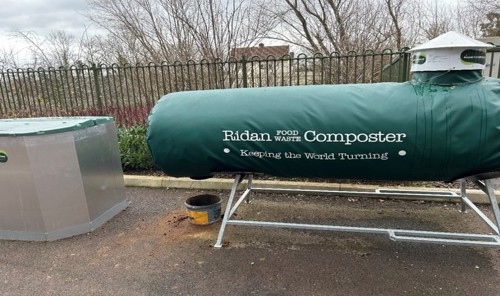
Leckhampton High School bought a Ridan Composter in 2024. Since then all food waste at school has been processed in the composter.
The school site manager manages food waste from lunch times and moves it from the dining areas into the composter.
The composter needs woodchip to be added regularly, which is sourced on site.
Compost produced on site is used on the grounds.
The school eco club support the running of the Ridan composter by turning the handles during their lunch breaks (this only needs to be done infrequently but alongside educating the students gives them a way to be more involved).
In order to comply with Animal By Products legislation, any cooked food waste and peelings from the kitchen which is composted at your school, must come from the school site, however this can include wasted food from packed lunches.
Please email waste@gloucestershire.gov.uk / Kathryn.turner@gloucestershire.gov.uk
Please email waste@gloucestershire.gov.uk / Kathryn.turner@gloucestershire.gov.uk
Last reviewed: